Our PhD Alumni
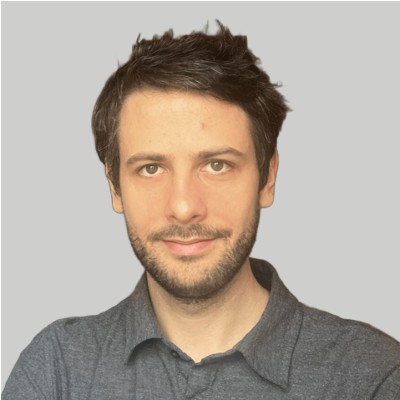
GABRIELE FARINA
Current job (as of 2026): Postdoctoral Researcher at LHSV – Saint-Venant Hydraulics Laboratory
Alumnus: PhD DICACIM, XXXVII cohort
PhD thesis supervisor: Marco Pilotti
PhD thesis co-supervisor: Giulia Valerio
Thesis title: Implementation of a mathematical model for unsteady flow in irrigation channel networks with application to the case of management of Canale Vacchelli, Consorzio Irrigazioni Cremonesi
Thesis keywords: Irrigation Channel Networks; Hydraulic Modeling
PhD Thesis abstract:
On a global scale, 70% of water withdrawals are used in agriculture; furthermore, the population that bases its livelihood on agricultural products is increasing. All this in a context of clear climate change. From these simple considerations it is clear that the management, control and optimization of the distribution of water volumes in agriculture has a fundamental importance. In particular, this consideration is strengthened by the fact that generally the Irrigation Consortia are ancient institutions that manage the distribution of irrigation resources by implementing “equilibrium” solutions resulting from the experience gained over the years, experience that could however not suitable for the future conditions imposed by climate change. A rational and physically based tool that can be of help in optimizing the distribution process is provided by the Saint-Venant Equations which, combined with the role of expert personnel, can make the management of irrigation networks more efficient. This study deals with the implementation of a numerical model that allows to solve the Saint-Venant equations in the one-dimensional formulation for a network of free-surface channels interconnected according to a sufficiently general topology. Since a model that has as its objective the modeling of an irrigation network must integrate, through appropriate internal boundary conditions, some fundamental hydraulic works, with which the regulation of the incoming flows to the irrigation network and of the flows delivered to the secondary channels is implemented, this component is present in the implemented model. Furthermore, the experimental activity carried out in the context of this Thesis has allowed to observe the effect of the growth process of macrophytes on the hydraulic roughness of the channels during the irrigation season. The growth and development of vegetation is mainly governed by solar radiation, the presence of nutrients and the temperature of the water. For this reason, it was decided to couple the implemented hydraulic model with a thermal model that allows modeling the temperature of the canal network for the entire irrigation season. This Thesis shows the steps taken for the implementation and validation of the various components described and their application to the Canale Vacchelli, the most important canal managed by the Consorzio Irrigazioni Cremonesi and one of the most important in northern Italy.
What were the most significant experiences during your PhD?
One of the most significant aspects of my PhD was the close collaboration with a company actively operating in the field, namely Consorzio Irrigazioni Cremonesi, an important irrigation consortium responsible for managing one of the largest and most important irrigation channel networks in the Province of Cremona. Pursuing a PhD in collaboration with a company operating in the field was interesting because it combines academic research with the company’s specific interests and makes it possible to address real and practical challenges. Moreover, the results and progress were presented both at scientific conferences and to professionals directly involved in day-to-day management, allowing the work to benefit from multiple perspectives (academic and practical viewpoints). This experience provided the opportunity to see the direct application of research in a real-world context.
What skills did you develop during your PhD?
The PhD equipped me with a solid theoretical and practical background in the field of hydraulics, especially in free-surface flow, strengthening my ability to think critically when facing complex and new problems. During my PhD, I learned to manage my time effectively by meeting deadlines, achieving intermediate milestones, and working independently throughout the years of the PhD. Additionally, I think that the PhD improved my communication skills by giving me the opportunity to discuss my work with experts in the field, at conferences, and during my research period abroad. Finally, I improved my academic writing by means of the preparation of scientific papers, conference contributions, and my doctoral thesis.
What professional experience have you gained since completing your PhD (as of 2026)?
Since completing my PhD, I have been working as postdoctoral researcher at the Laboratoire Hydraulique Saint-Venant (LHSV), a joint laboratory between École Nationale des Ponts et Chaussées (ENPC) and Électricité de France R&D (EDF R&D) in Chatou, France, that brings together academic research and industrial application.
My work mainly focuses on flood hazard assessment, and I am currently working on two complementary topics. The first, which investigates flood hazard assessment for a specific site of interest, is carried out within the framework of an international collaborative project involving universities and industrial partners. The second focuses on the assimilation of high-resolution data acquired by drones to improve the calibration of numerical models used for flood inundation studies. These experiences have strengthened my expertise in numerical modeling for flood hazard assessment, while also enhancing my ability to collaborate with multidisciplinary teams of researchers and engineers.