
Appropriate Methodologies and Techniques for International Development Co-Operation (Health Track and Technology Track)
Teaching activities
The teaching activity includes initiatives of common interest to the two majors as well as specific activities for each major.
Activities common to the two addresses: international cooperation methodologies; international law; economy; cultural antropology; political geography and geopolitics; pedagogy; project cycle method.
Activities for the technological direction: appropriate technologies in the environmental field in the countries of the southern hemisphere; management/treatment of water for human use; water and sanitation; solid waste management; power.
Healthcare activities: (i) medical methodologies for countries with limited resources; (ii) medical statistics; (iii) infectious and tropical diseases; (iv) diagnostic methodologies; (v) monitoring protocols; (vi) therapeutic tools.
Research activities
This curriculum, in addition to the research activities previously reported for all curricula, is characterized by the direct involvement of doctoral students in cooperation projects in the South of the world in order to implement, validate and disseminate appropriate solutions/technologies for improving the health of environment and man. In this phase, which is spread over the three years of the Doctorate with a greater weight in the second and third year, the Doctoral Students spend a period in the field at research institutes/universities, Non-Governmental Organizations, other public and private bodies involved in project activities. The main research topics of interest are reported below.
Technological address: (i) Environmental issues in resource-limited contexts; (ii) Environmental problems in emergency situations; (iii) Appropriate technologies for the solution of environmental problems related to the management of drinking water, waste water, waste and the energy recoverable from them.
Health address: (i) Determinants of health and disease in resource-limited contexts; (ii) Primary Health Care Strategy; (iii) Health systems in resource-limited countries; (iv) Integrated healthcare projects; (v) The major infectious endemics (HIV, malaria, tuberculosis, parasitic endemics); (vi) Maternal and child health; (vii) Malnutrition and malnutrition.
Academic Disciplines
CEAR-01/A (formerly ICAR/01) – Hydraulics
CEAR-02/A (formerly ICAR/03) – Sanitary and Environmental Engineering
CEAR-07/A (formerly ICAR/09) – Structural Analysis and Design
MEDS-10/B (formerly MED/17) – Infectious Diseases
AGRI-05/A (formerly AGR/11) – General and Applied Entomology
GEOG-01/B (formerly M-GGR/02) – Economic and Political Geography
Main Advisor
Prof. Sabrina Sorlini
Program Assistant
Prof. Mentore Vaccari
Current PhD Students

PhD Alumni
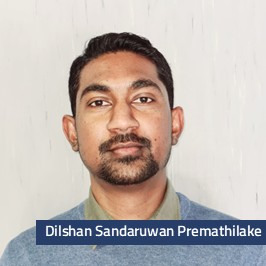
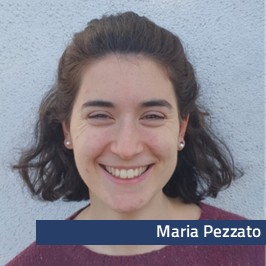
List of international publications of DICACIM PhDs limited to the three-year period following the title
- Premathilake D.S., Silva A.A.M.P., Illankoon W.A.M.A.N., Rosatelli A., Beltrametti F., Bava A., Battaglia F., Mendola M., Passaro F., Abbà A., Franzetti A., Vaccari M., (2026) Environmental, economic, and social trade-offs in biochar and biosurfactant-based soil remediation: A critical review based on mass flow analysis. Energy nexus; 21, 100644; https://doi.org/10.1016/j.nexus.2026.100644
- Premathilake D.S., L.F. Guimarães, D.C.R. Espinosa, J.A.S. Tenório, M. Vaccari, A.B. Botelho Junior, (2025) Advancing hydrometallurgical recycling of spent lithium-ion batteries: an AI-based readiness and sustainability assessment. Rsc Sustainability; 3(11), pp. 4975–4991; https://doi.org/10.1039/d5su00417a
- Premathilake D.S., Illankoon W.A.M.A.N., Botelho Junior A.B., Milanese C., Tenório J.A.S., Espinosa D.C.R., Vaccari M., (2025) Comparative Analysis of Facile and Novel Graphite Recovery Methods from Spent Lithium-Ion Batteries: Environmental and Economic Implications. ACS Sustainable Chemistry and Engineering; 13(4), pp. 1737–1753; https://doi.org/10.1021/acssuschemeng.4c09084
- Matteelli, A., Russo, G., Rossi, L., Di Rosario, G., Cirillo, D.M., Girardi, E., (2025) Four months daily rifampicin vs. 3 months daily rifampicin/isoniazid for the treatment of tuberculosis infection in asylum seekers: a randomized controlled trial. Clinical Microbiology and InfectionOpen source preview; 31(8), pp. 1330–1335; https://doi.org/10.1016/j.cmi.2025.02.037
- Premathilake D.S., Colombi F., Junior A.B.B., Soares Tenório J.A., Espinosa D.C.R., Vaccari M., (2024) Recycling Lithium-Ion Battery graphite: Synthesis of adsorbent materials for highly efficient removal of dye and metal ions from wastewater. Results in Engineering; 22, 102232, https://doi.org/10.1016/j.rineng.2024.102232
- Premathilake D.S., Ambaye T.G., Botelho Junior A.B., Lima A.T.M., Espinosa D.C.R., Vaccari M., (2024) Comparative environmental and economic assessment of emerging hydrometallurgical recycling technologies for Li-ion battery cathodes. Sustainable Production and Consumption; 51, pp. 327 – 344; https://doi.org/10.1016/j.spc.2024.09.015
- Premathilake D.S., Botelho Junior A.B., Tenório J.A.S., Espinosa D.C.R., Vaccari M., (2023) Designing of a Decentralized Pretreatment line for EOL-LIBs Based on Recent Literature of LIB Recycling for Black Mass. Metals; 13(2):374; https://doi.org/10.3390/met13020374
- Russo, G., Marchese, V., Formenti, B., Di Rosario, G., Girardi, E., Matteelli, A. (2023) Screening for Tuberculosis Infection among Migrants: A Cost-Effectiveness Analysis in the Italian Context. Antibiotic;, 12(4), 631; https://doi.org/10.3390/antibiotics12040631